
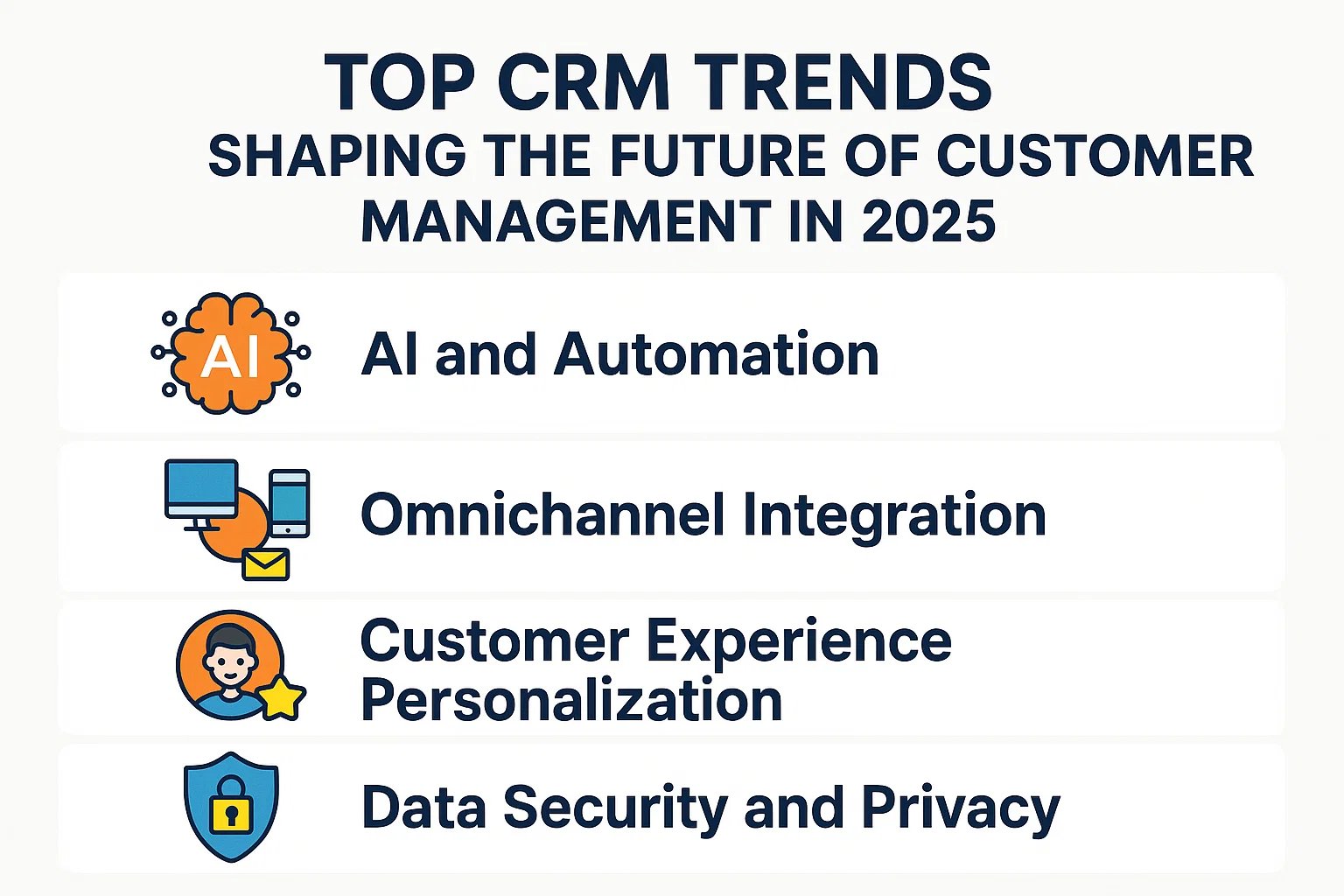
CRM software continues to evolve rapidly as businesses demand better automation, deeper analytics, and unified customer experiences. In 2026, CRM platforms are powered heavily by artificial intelligence, predictive modeling, and hyper-personalization—transforming how companies manage relationships and drive growth.
1. AI-Driven Customer Automation
Artificial intelligence now automates repetitive CRM tasks such as lead scoring, customer segmentation, follow-ups, and behavior prediction. This allows sales and marketing teams to focus on high-value activities while improving efficiency and accuracy across the customer lifecycle.
2. Predictive Analytics for Stronger Decision-Making
Advanced machine learning models enable businesses to forecast customer intent, estimate churn probability, and calculate lifetime value. These predictive insights empower organizations to make smarter strategic decisions and proactively engage customers before issues arise.
3. Omnichannel Customer Experiences
Modern CRM platforms unify communication channels—including chat, email, social media, SMS, and voice—into a single dashboard. This seamless integration ensures consistent messaging, faster response times, and a more personalized customer journey across every touchpoint.
4. Enhanced Customer Data Security
With increasing global privacy regulations, CRM providers are prioritizing stronger encryption, secure APIs, compliance frameworks, and transparent data governance. Businesses adopting secure CRM systems can build customer trust while avoiding regulatory risks.
5. No-Code & Low-Code CRM Customization
Drag-and-drop builders now allow teams to create workflows, dashboards, automation rules, and forms without developer support. This flexibility accelerates deployment, reduces costs, and empowers non-technical users to tailor CRM systems to their exact needs.
6. Deep Integrations with Marketing & Sales Platforms
CRMs in 2026 integrate directly with advertising networks, social media platforms, accounting software, e-commerce tools, and project management systems. These integrations create a unified ecosystem where customer data flows seamlessly between departments.
Conclusion
The CRM landscape in 2026 is smarter, faster, and more connected than ever before. Organizations that embrace AI automation, predictive analytics, omnichannel engagement, and secure integrations will scale more efficiently and deliver exceptional customer experiences in an increasingly competitive digital world.